Season: Spring/Summer 2027
Event Dates: September 9–15, 2026
For most of the last decade, the designers making the case for clothes built to last were making it uphill. The economics ran against them: cheaper to copy, cheaper to ship, cheaper to replace. This September, for the first time in a while, the ground has tilted their way.
The Spring/Summer 2027 season arrives at a genuinely hopeful moment, and the reasons are structural rather than sentimental.
- The de minimis loophole that let Shein and Temu ship duty-free parcels into American homes has been suspended, with a statutory repeal already on the books for 2027.
- France has passed an ultra-fast-fashion law that will attach an escalating environmental fee to each item and ban influencer promotion of the platforms that sell them.
- Resale is growing several times faster than the retail clothing market that spawned it.
- And the CFDA has made this the first fur-free New York Fashion Week in the event’s history.
None of that guarantees good clothes. But it changes the question a runway show is being asked to answer, and it rewards the people who have been answering it correctly all along. For a decade, the question was what’s next.
This September, it reads more like what’s worth keeping — and that happens to be the question the best designers in New York were already asking.
The Market Comes First
The part of this week that actually moves money starts before the runways do, and almost nobody photographs it.
- From September 9 to 11, COTERIE, MAGIC and SOURCING take over the Javits Center — three days of appointments, line sheets and order writing, open 9 am to 7 pm Wednesday and Thursday and closing early Friday afternoon.
- Across town at the Starrett-Lehigh Building, Brand Assembly runs the same three days with 250-plus contemporary brands in front of a thousand-plus buyers.
- These are the pre-shows: a buyers’ market that overlaps the first two days of the runway calendar and then clears out before the marquee shows have finished.
That sequencing matters more than it looks. A runway show is a signal; the market floor is the transaction — the place where minimum order quantities, delivery windows, margin targets and landed cost get negotiated into actual garments. Historically it’s also where the case for slow, well-made clothing went to die: a buyer weighed a twelve-week lead time and a $180 wholesale price against something that shipped in four weeks at $40, and the spreadsheet won.
This September, the math on that floor has changed. The de minimis suspension raised the landed cost of the cheapest imports. SOURCING — a show explicitly about where and how things get made — sits under the same roof as the brands whose supply-chain answers used to be a footnote in a press release.
Buyers now have both regulatory and consumer reasons to ask harder questions, and for the first time in a while the honest answer might be a commercial advantage rather than a cost.
The Eve-of-Week Head Start
The runway schedule front-loads itself too. Ralph Lauren, who has long set his own schedule, presents Spring 2027 on Wednesday, September 9. Coach, Rachel Comey, Cult Gaia, J. Press and Libertine also show on the eve of NYFW, ahead of the official kickoff — the same day the Javits floor opens.
That overlap has stopped being a quirk and started being a strategy. Buyers arrive to a schedule that has already given them the largest commercial houses before the crush begins, and the heritage brands get an uncontested news cycle instead of competing for attention with the seventy shows that follow.
Rachel Comey’s presentation carries extra weight this time: she’s marking twenty-five years in business, which in an industry that turns over labels as quickly as it turns over garments is its own quiet argument.
The official CFDA calendar then runs Thursday, September 10 through Tuesday, September 15 — roughly seventy runway shows and designer presentations, with additional collections shown by appointment and digitally.
Friday Belongs to the City First
The Friday of this fashion week is September 11, 2026 — the twenty-fifth anniversary of the attacks. The CFDA has pushed the entire Friday schedule to a 10:00 am start out of respect for the observance.
It is a small logistical change and a considerable statement. A delayed start means no fashion event competes with the morning’s moments of silence — that the industry stepped back from the calendar it guards so carefully says something about how the day still lands here.
For a fashion week inseparable from downtown Manhattan, and for a city where a good number of the people in those rooms remember exactly where they were, the gesture is close to home.

The first fur-free New York Fashion Week
Following the CFDA’s announcement in December 2025, the fur-free policy applies to every brand on the Official NYFW Schedule this season. New York becomes the second of the big four fashion capitals to formalize a ban, after London; Milan and Paris still have not.
It’s fair to point out that most of these designers had already made this choice on their own, and that the policy formalizes a consensus rather than forcing one.
That’s true, and it’s also the good news. It means the standard was reachable — that an industry body could codify something its members had already decided was right, without a fight. And it establishes a precedent worth more than the policy itself: participation in the official schedule can be conditioned on a material standard.
That is a very different lever from a sustainability panel, and everyone in the room knows it.
The new arrivals are the best part
This is the most interesting group of newcomers New York has had in years, and it’s worth enjoying them on their own terms before drawing any conclusions from the list:
- Conner Ives — the London-based American who builds collections out of salvaged and upcycled material and has turned that constraint into a real design language — shows in New York for the first time.
- High Sport arrives with one of the most quietly beloved products in contemporary fashion: the $860 Kick pant, knit in Italy from European yarns, a garment people buy once and then talk about for years.
- Sabyasachi returns to a New York runway for the first time in roughly two decades, bringing a house built on embroidery and handwork measured in months rather than minutes; his New York show is one of the genuine events of the week.
- Magda Butrym, Patrick Taylor and Zaldy round out the new names.
- Three 2026 CFDA/Vogue Fashion Fund finalists — Bad Binch TongTong by Terrence Zhou, Jamie Haller, and Milamore by George Inaki — appear on the calendar for the first time.
- Monse, threeASFOUR and Tommy Hilfiger return to the official schedule.
They didn’t coordinate this, but a thesis emerges anyway: labor-intensive, material-honest, expensive in a way that is legible rather than arbitrary. These are clothes with a maker’s fingerprints on them, and several of them are functionally impossible to knock off well — which turns out to be its own form of protection.
Every one of these designers committed to that approach when it was the harder business to run. It’s a good season to see it pay off.

Photo by Sergio Martins on Unsplash 
Photo by Sergio Martins on Unsplash 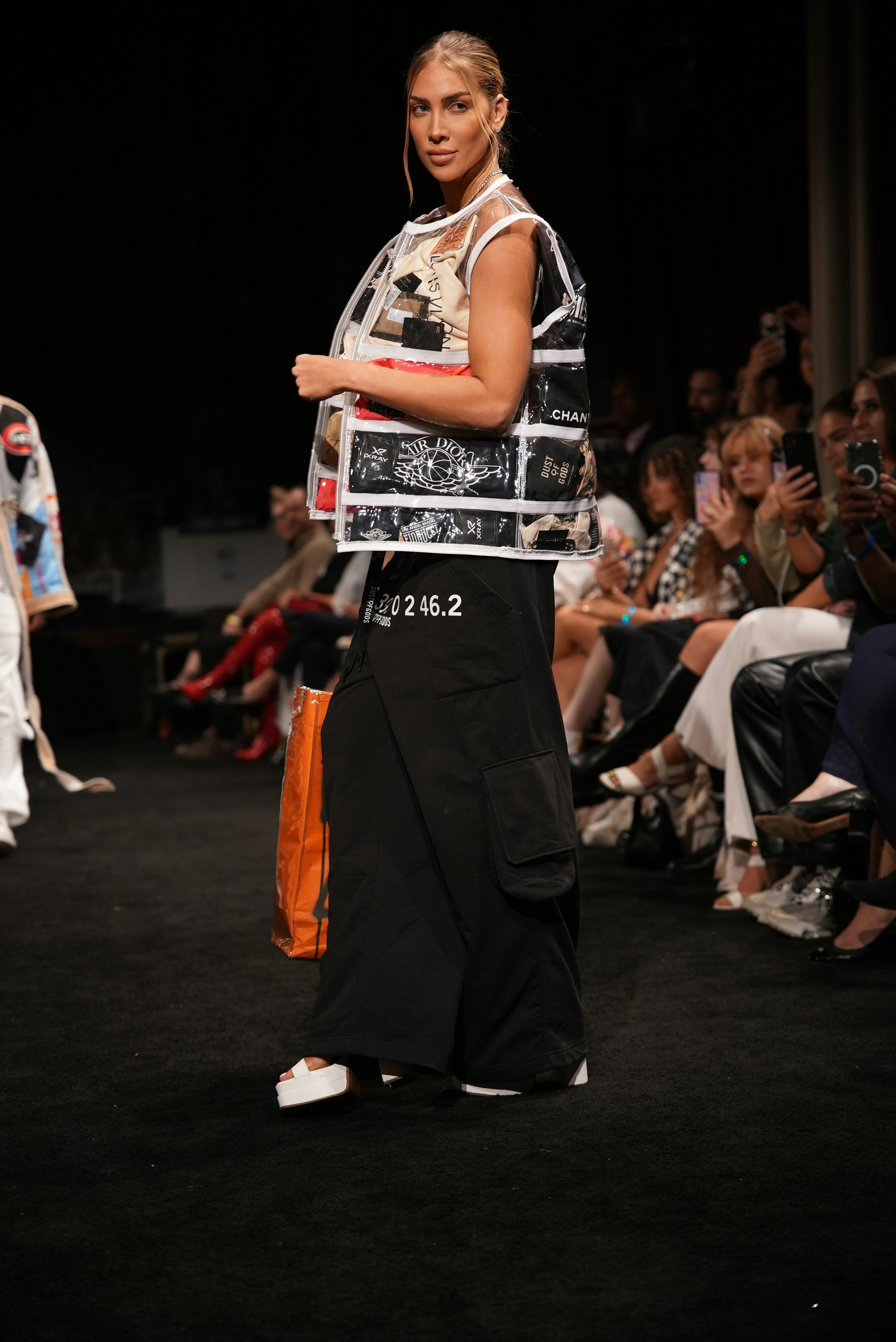
Photo by sofia inductgroup on Unsplash 
Photo by Happy Face Emoji on Unsplash 
Photo by Happy Face Emoji on Unsplash
Houses in transition:
- The marquee storyline is Henry Zankov’s first collection as artistic director of Diane von Furstenberg, opening the week on September 10 — and on paper it’s a lovely piece of matchmaking.
- Zankov built his own label on knitwear, a discipline that forces you to understand a garment from the yarn outward.
- DVF was founded on the wrap dress: not a silhouette borrowed from a trend deck but a real piece of design engineering, one garment that solved a problem for a generation of women and stayed solved.
- Handing that house to someone whose instinct is construction-first is the kind of appointment that suggests the people making these decisions are thinking past the next news cycle.
Elsewhere:
- Tommy Hilfiger stages his return at The Plaza, where he and Dee kept a penthouse for more than a decade, on September 10.
- Calvin Klein Collection continues its closely watched rebuild on September 11.
- Proenza Schouler and Tory Burch anchor the opening day;
- Khaite, Prabal Gurung and Anna Sui share September 12.
- Thom Browne closes on September 15, which by now is less a show than an annual thesis defense.
The numbers underlying the week
None of this is a moral awakening, and it doesn’t need to be. Prices, laws and consumer behavior are moving in the same direction as the designers doing the right thing — which is a far more durable arrangement than everyone agreeing to be virtuous.
The suspension of the de minimis exemption removed the structural subsidy underneath ultra-cheap import volume, and the statutory repeal follows in July 2027. France’s law, published this July, layers a per-item environmental fee reaching up to €20 by 2030 — capped at half an item’s pre-tax price — and bans influencer promotion of ultra-fast-fashion platforms, with six-figure fines attached. Research presented at Retail Technology Show 2026 found 54% of UK shoppers surveyed want tighter limits on cheap e-commerce imports, rising to 68% among Gen Z — the same Gen Z of whom 41% still buy from Shein at least monthly. The contradiction is the whole story.
Meanwhile ThredUp’s 2026 resale report projects the global secondhand market at $393 billion by 2030, roughly a tenth of all apparel spending, with the U.S. market growing nearly four times faster than the broader retail clothing market. Gen Z and Millennials account for 71% of that growth.
New York’s own Fashion Act — which would require supply-chain due diligence and science-based emissions targets from apparel companies with $100 million or more in global revenue, backed by civil penalties of up to $15,000 per violation per day — is still in committee, where it has been since 2022. But it’s still alive after four years and several amendments, which is more than most ambitious bills manage, and the industry has spent that time moving toward it voluntarily anyway. The fur policy happened because the CFDA could do it alone; the harder rules still require Albany.
Albany may find, when it finally gets there, that it’s codifying something rather than imposing it.

What to actually watch for
Skip the tally of who wore what. The tells this season are structural:
- Watch whether designers name their materials and their factories in show notes without being asked.
- Watch whether the new arrivals’ price points come with a legible explanation of what the money bought.
- Watch how many collections are shot to sell on a screen versus built to be worn in a room.
And watch Javits and Starrett-Lehigh from September 9 to 11. The orders written on those three days are the season’s real verdict — placed by people spending their own budgets, before a single review is filed. If slow fashion has become a business rather than a position, that’s where it will show up first, and the early signs are good.
Fashion has been announcing its own reform for twenty years, and it’s been easy to be tired of hearing it. What’s different this September is that the designers who never stopped doing the work — the up-cyclers, the knitwear obsessives, the embroiderers, the twenty-five-year independents — are walking into a week where the economics, the regulation and the customer have finally arrived to meet them.
That’s a good thing to get to watch.

CKS Cloud & Fashion/Apparel
CKS Cloud works across the whole fashion and apparel chain — manufacturing, import and export, distribution, wholesale and retail, e-commerce, and model agencies. That vantage point means we see a single season from several sides at once: the production calendar, the customs paperwork, the warehouse, the sales floor, and the storefront.
It’s also why we pay close attention to weeks like this one. Shows are where the industry says out loud what it intends to do next; the market floor is where it commits. Watching both tells us where demand is heading, what is shifting in sourcing and compliance, and where the pressure is about to land on our clients’ operations.



Leave a Reply