
Expectation-Setting Isn’t a Soft Skill.
It’s a Control Mechanism.
Most business friction isn’t caused by complexity. It’s caused by ambiguity:
- In ERP projects.
- In sales cycles.
- In billing.
- In contracts.
- In meetings.
Stress doesn’t come from hard problems. It comes from:
- Unspoken assumptions
- Undefined approval processes
- “I thought you meant…” moments
- Billing surprises
And in the world of ERP, CRM, integrations, reporting, and financials — ambiguity compounds fast.
Expectation-setting is not a courtesy.
It is a structural control system.

When & Why Projects Fail
Most failed implementations don’t fail because the software couldn’t do the job. They fail because:
- Scope wasn’t defined precisely.
- Roles weren’t clarified.
- Change requests weren’t structured.
- “Completion” wasn’t defined completely.
- Approval authority wasn’t assigned.
- The billing model wasn’t explained in plain language.
When expectations are rough instead of polished, friction is guaranteed.
When expectations are clear and smooth, the friction goes away.
Across industries — fashion, distribution, manufacturing, nonprofit, sports — the pattern is the same.
Complexity doesn’t break projects.
Misalignment does.

Three Areas Where We Can Eliminate 80% of Friction
If you consistently set expectations in three key areas, most conflict is avoided…
1. Scope Expectations
This is where many organizations hesitate. You must define:
- What is included.
- What is not included.
- What assumptions the estimate is based on.
- How change requests are handled.
- How additional hours are approved.
Scope clarity is not about limiting the client.
It is about aligning with them.
When scope is defined well, no one feels “nickel-and-dimed” and no one feels overextended.
2. Process Expectations
Process is the invisible backbone of trust. Clients don’t mind paying for work. They mind surprises. Process expectations include:
- How hours are tracked.
- How billing flows.
- When invoices are issued.
- Who approves deliverables.
- What documentation looks like.
- How meeting notes are captured.
- How issues are escalated.
If this isn’t explained early, assumptions fill the gap. And assumptions are expensive. This is why structured methodologies matter.
A defined implementation and optimization framework is simply formalized expectation-setting.
Predictability reduces anxiety.
3. Outcome Expectations
This is the most overlooked category. You must define:
- What “success” means.
- What “completion” means.
- What “accepted” means.
- What is considered optimization versus enhancement.
- What happens after go-live.
If “success” isn’t defined, both sides create their own definition. That’s where frustration begins.
Strong teams align on expectations met with measurable outcomes — not vague aspirations.

Expectation-Setting in SALES
This matters even before the project begins. In sales conversations:
- Don’t oversimplify.
- Don’t over-promise.
- Don’t imply “it’s easy” when it isn’t.
- Don’t assume the client understands ERP complexity.
Expectation-setting in sales is not about reducing excitement. It’s about building durable trust.
Clients who understand the road ahead are calmer clients.

Expectation-Setting in MEETINGS
Every meeting should answer three things:
- What are we deciding?
- Who owns what?
- What happens next?
If those aren’t clear, the meeting was just a conversation.
Meeting summaries and action tracking are not administrative overhead — they are expectation alignment tools.
Expectation-Setting in ERP
Setting expectations matters more in ERP because it touches, connects to, and includes all key areas of any business or organization:
- Finance
- Operations
- Inventory
- Sales
- Purchasing
- Manufacturing
- Compliance
It is not a website refresh. It is core infrastructure. Infrastructure demands clarity.
Ambiguity in infrastructure causes operational stress, financial stress, and leadership stress.
That’s why expectation-setting is not a “nice-to-have.” It’s operational discipline.

The Legal Reality
The strongest agreements are the ones you never have to enforce. If expectations are clear:
- There are fewer disputes.
- There are fewer defensive emails.
- There are fewer escalations.
- There is less posturing.
Legal language should reinforce clarity — not compensate for its absence.
If you find yourself constantly referencing the contract, expectations were probably not aligned early enough.
The Control Mechanism Mindset
Expectation-setting is proactive, preemptive, predictive, problem-avoidance by taking positive control in advance, which:
- Reduces legal exposure.
- Reduces emotional tension.
- Reduces scope creep.
- Reduces billing friction.
- Reduces burnout.
It also increases trust, professionalism, predictability & strong, long-term partnerships.
The clearer the expectations, the less you need to enforce them.
When everyone understands the rules of the game, the game runs smoothly.
Are You Setting Expectations? You Should Be! (We are…)
At CKS Cloud, expectation-setting is embedded in how we work.
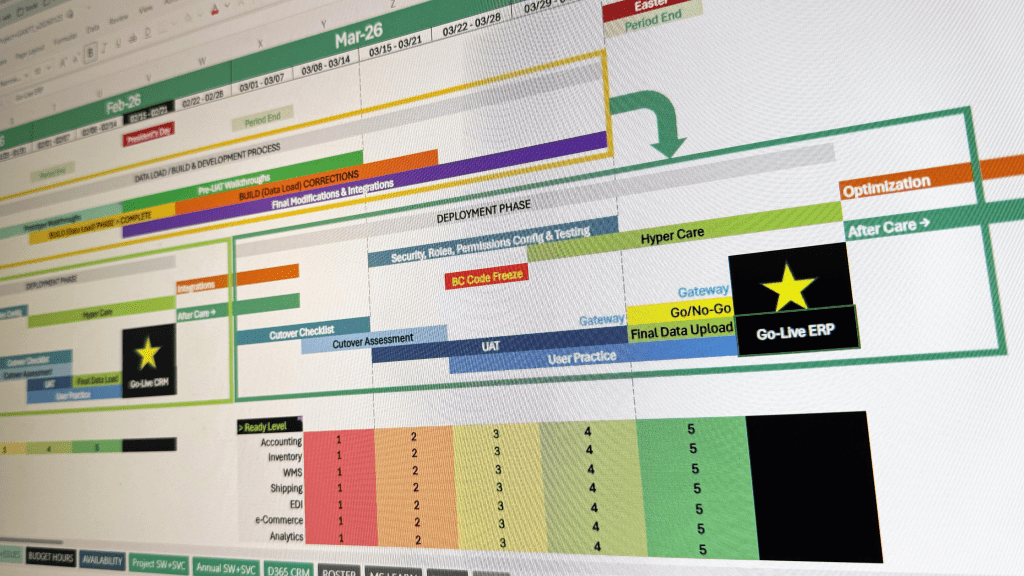
Our Rapid Implementation (QuickStart) and Rapid Optimization (QuickSteps) Methodologies are not just project frameworks — they are structured, expectation-alignment systems for optimal outcomes. They define scope, process, and outcomes before execution begins, and lead to better results. For companies who have had a poor ERP experience, this is often the missing piece.
That’s why we created the Guaranteed Results Session.
For rescue prospects and new prospects alike, we invest a half-day or full-day session to deliver real value immediately — insights, corrections, configuration fixes, documentation clarity, or measurable improvements. Not a pitch deck. Not a promise. Actual progress.
Why start with a CKS “Guaranteed Results” Session?
Because expectation alignment is easier when trust is built through action. And we are not interested in short-term wins. We are interested in long-term collaboration with trusted partners and long-term partnership with our clients — partnering for stability, profitability, and growth over time.
Clear expectations are how durable partnerships and long-term, healthy relationships begin…
The strongest partnerships are the ones where both sides understand the rules in advance, respect the process, and succeed together.
An Unexpected (but Funny) Realization
Posting today, we are keenly aware of publishing about clarity, discipline, and doing things right…on Friday the 13th. It’s a day when some people are convinced: anything that can go wrong, will go wrong…
We prefer a more practical, logical, proactive approach: When expectations are clear, processes are defined, and outcomes are aligned — very little “goes wrong.”
Perhaps it’s actually the perfect day to post about this. 🙂
Because superstition isn’t a strategy.
Setting expectations is.
Featured Image (top left) by Russ Murray / @remages



 CKS // Cloud Solutions
Leave a comment