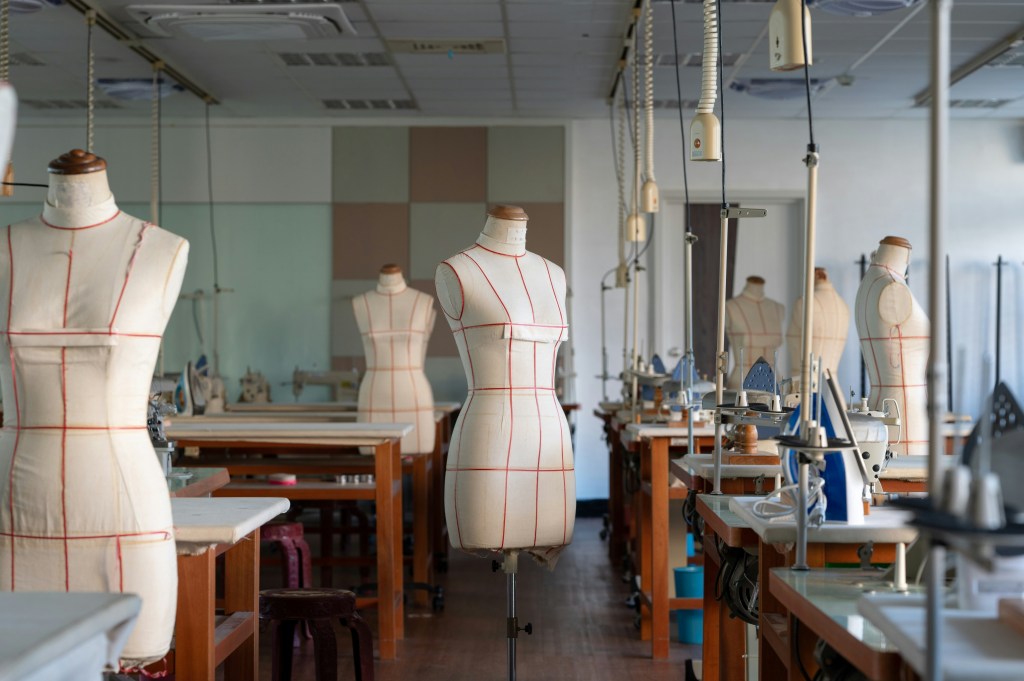
Photo by Arawark chen on Unsplash (left)
At CKS Cloud Solutions, we’re often asked where ERP, PLM, and Planning & Forecasting fit in the fashion and apparel industry. Recently, while working with one of our fashion clients, the question came up directly:
“Which system handles what—ERP vs PLM vs Planning & Forecasting?”
We decided to research the topic in-depth so we could provide detailed, accurate information—not just for that client, but also for others who may be evaluating these platforms. The result was a clear breakdown of the different solution components, how they complement one another, and how CKS can help fashion companies put the right mix together.
Our client was very satisfied with the clarity, and they worked with us to adjust their implementation plan and phases accordingly. We’d like to share the highlights of that research with you here.

The Role of PLM in Fashion & Apparel
Product Lifecycle Management (PLM) is all about design-to-production:
- Centralizing product data, from sketches and CAD designs to fabric libraries and tech packs.
- Managing variants across style, color, and size.
- Handling sampling, fit approvals, and supplier collaboration.
- Building bill of materials (BOMs), tracking costs, and coordinating with vendors.
- Driving collections with workflow calendars and milestones.
Some modern PLM systems also provide merchandising or line-planning modules. But in general, PLM stops at the point of product handoff to ERP and does not include full pre-sales planning, sales forecasting, or financial management.

The Role of ERP in Fashion & Apparel
ERP (Enterprise Resource Planning) provides the backbone of the business:
- Inventory and supply chain management, ensuring the right products flow from production to distribution.
- Financial management including accounting, payroll, landed costs, and allocations.
- Production management, linking planning calendars to actual sourcing and fulfillment.
- Integration with retail, wholesale, and e-commerce channels.
At CKS, we specialize in Microsoft Dynamics 365 Business Central (D365 BC) for fashion, enhanced by the K3 Pebblestone Fashion Suite. Together, these platforms handle the complex size/color/fit matrix, fashion-specific costing, and supply chain management that apparel companies demand.

The Role of Planning & Forecasting in Fashion & Apparel
Planning & Forecasting solutions focus on pre-season, in-season, and post-season analytics and projections:
- Assortment and line planning to align product variants with business targets.
- Sales forecasting using predictive analytics, seasonal trends, and channel data.
- Demand planning and allocation at the channel, region, and SKU level.
- Open-to-buy and financial targets, ensuring business units stay within budget and margin goals.
CKS has deep experience with third-party Planning & Forecasting tools that integrate seamlessly with Microsoft D365, giving decision-makers real-time visibility and control over demand, production, and financial projections.

Where CKS Adds Value: Total Solution, Single Source
CKS and our partner K3 bring together the best of all three worlds:
- ERP expertise with Microsoft Dynamics 365 Business Central.
- Fashion-specific functionality with the K3 Pebblestone Fashion Suite.
- Third-party PLM integration to connect design and product development directly into ERP.
- Third-party Planning & Forecasting solutions integrated into the Microsoft ecosystem.
This allows fashion and apparel businesses to work with one trusted advisor—CKS—for a total, single-source solution that connects every step of the fashion value chain: design, product development, sourcing, inventory, retail, wholesale, e-commerce, financials, planning, and forecasting.
Next Step: Ask CKS About Fashion ERP + PLM +P&F
Our recent client engagement reminded us of how important it is to clearly distinguish between ERP, PLM, and Planning & Forecasting. Each has a unique role to play, but together, they form the digital foundation that allows fashion brands to thrive in a fast-moving industry.
At CKS, we’ve been serving the fashion and apparel industry for decades. Whether it’s implementing Microsoft D365 Fashion ERP, deploying K3 Pebblestone, integrating with a third-party PLM, or extending functionality with Planning & Forecasting tools, we are ready to deliver the end-to-end solution you need.
If you’d like to learn more about how these systems can be tailored to your business, reach out to us—we’d be happy to share our experience and expertise.



Leave a Reply